


Tooth-Colored vs. Silver Fillings: Which Is Better for You?
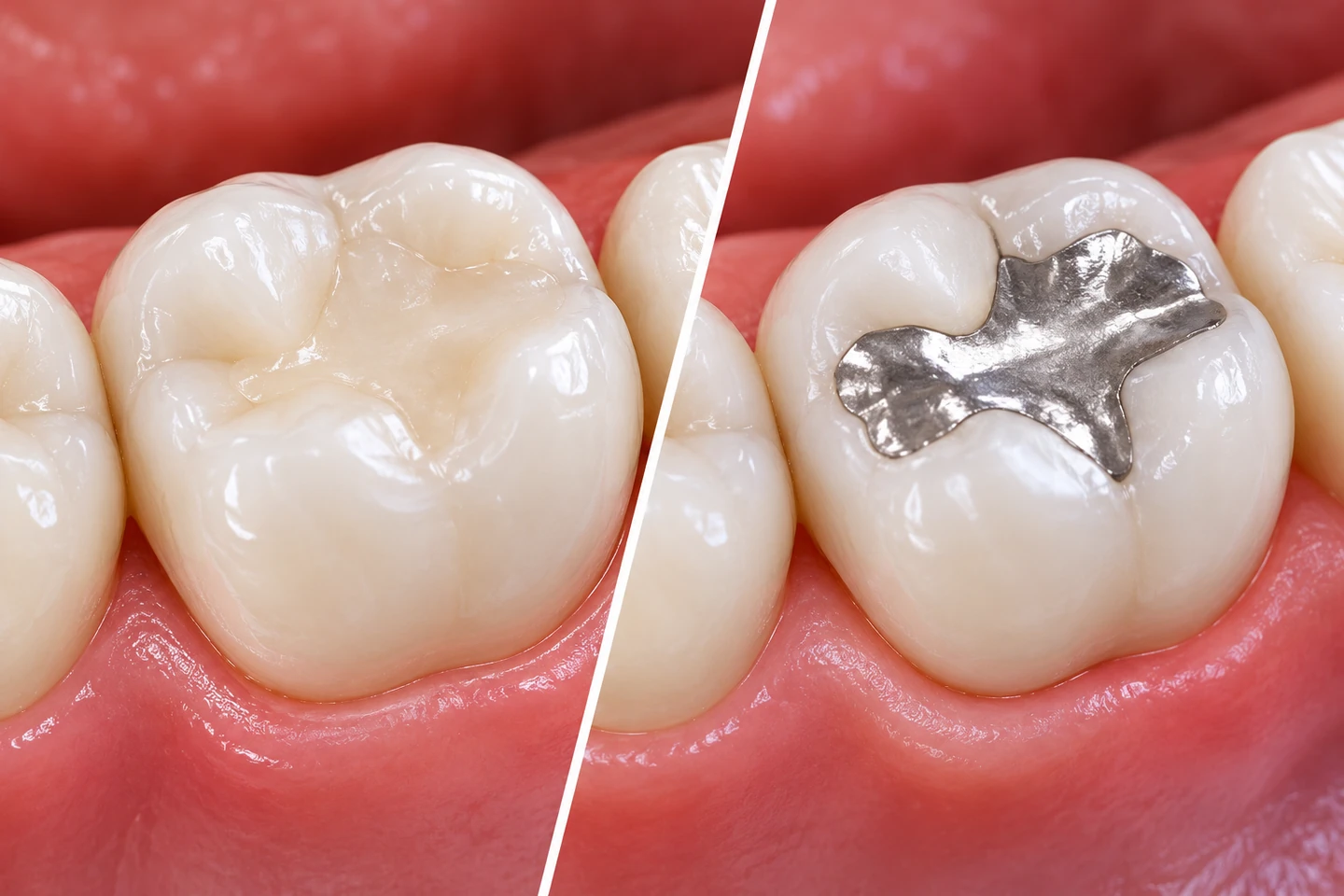
If you have a cavity, your dentist may recommend a dental filling to restore the damaged tooth. However, you may have a choice between tooth-colored fillings and traditional silver fillings.
Both options are used to repair teeth affected by decay, but they differ in appearance, materials, durability, and placement requirements.
Tooth-colored fillings are designed to blend with your natural teeth, while silver fillings, also called dental amalgam fillings, have a noticeable metallic appearance.
So, which is better for your smile?
The answer depends on the location of the cavity, the amount of remaining tooth structure, your oral health, and your personal preferences.
At Dental Limited, we believe patients should understand their restorative treatment options before making a decision. Here is what you should know about tooth-colored and silver fillings.
What Are Dental Fillings?
Dental fillings are restorative materials used to repair teeth damaged by cavities or minor fractures.
When bacteria produce acids that break down enamel, a cavity may develop. If left untreated, the decay can progress deeper into the tooth and eventually affect the dental pulp.
During a filling procedure, the dentist removes the decayed portion of the tooth, cleans the affected area, and fills the space with a restorative material.
The purpose is to:
- Restore the tooth's shape and function.
- Prevent further decay in the treated area.
- Make chewing more comfortable.
- Preserve as much natural tooth structure as possible.
- Reduce the risk of more extensive dental treatment.
The two commonly discussed filling options are composite resin and dental amalgam.
What Are Tooth-Colored Fillings?
Tooth-colored fillings are usually made from composite resin, a mixture of plastic resin and finely ground glass or ceramic particles.
The material is available in different shades to closely match the natural color of your teeth.
Because composite fillings blend with surrounding tooth structure, they are commonly used for visible teeth and other areas where appearance matters.
Advantages of Tooth-Colored Fillings
1. Natural Appearance
One of the biggest benefits of composite fillings is their appearance. The material can be selected to match your existing teeth, making the restoration less noticeable.
2. Conservative Tooth Preparation
Composite resin bonds directly to the tooth structure. This often allows dentists to preserve more healthy enamel and dentin during treatment.
3. Suitable for Visible Teeth
Tooth-colored fillings are a popular option for front teeth and other visible areas where a natural appearance is important.
4. Can Repair Minor Damage
Composite resin can also be used to repair certain small chips, worn edges, and minor defects in addition to cavities.
5. No Metallic Appearance
Unlike traditional amalgam fillings, composite restorations do not create a visible silver or metallic spot when you smile or speak.
Disadvantages of Tooth-Colored Fillings
Despite their benefits, composite fillings have some limitations.
- They may not last as long as amalgam in certain high-stress situations.
- They can become stained over time, particularly with frequent exposure to coffee, tea, or tobacco.
- Placement can take longer because the material requires careful layering and curing.
- They may be more expensive, depending on the dental practice and insurance coverage.
- Large restorations may be more likely to wear or fracture under heavy chewing pressure.
The lifespan of a composite filling depends on its size, location, placement technique, and oral hygiene habits.
What Are Silver Fillings?
Silver fillings are commonly made from dental amalgam, a mixture of metals that includes silver, tin, copper, and elemental mercury.
Dental amalgam has been used for many decades because of its strength and ability to withstand chewing forces.
It has traditionally been used for cavities in the back teeth, where chewing pressure is greater.
Advantages of Silver Fillings
1. Durability
Amalgam fillings are known for their strength and may last many years when properly maintained.
2. Suitable for Back Teeth
Because they can withstand significant chewing forces, silver fillings have traditionally been used in molars and premolars.
3. Efficient Placement
In many cases, amalgam fillings can be placed relatively efficiently.
4. Long History of Clinical Use
Dental amalgam has a long history of use in restorative dentistry, with substantial evidence supporting its performance.
Disadvantages of Silver Fillings
Silver fillings also have limitations that patients should consider.
- Their metallic color makes them noticeable.
- They do not bond to the tooth in the same way composite resin does.
- Placement may require additional tooth preparation.
- The metal can expand and contract with temperature changes.
- They may contribute to discoloration of surrounding tooth structure.
- Some patients prefer to avoid materials containing mercury.
The FDA recommends avoiding new amalgam fillings in certain higher-risk populations, including pregnant women, nursing women, children under six, and people with certain neurological or kidney conditions, when possible and appropriate.
However, existing amalgam fillings that are in good condition generally do not need to be removed solely because they contain mercury. Unnecessary removal can damage healthy tooth structure and temporarily increase mercury vapor exposure.
Patients with specific health concerns should discuss their options with their dentist.
Which Filling Is Better for Front Teeth?
Tooth-colored composite fillings are generally preferred for front teeth because they blend with natural enamel.
When you speak or smile, the restoration is less noticeable.
Composite resin also allows dentists to restore minor chips and shape irregularities while maintaining a natural-looking appearance.
Silver fillings are rarely selected for front teeth because of their metallic color.
Which Filling Is Better for Back Teeth?
Both composite and amalgam may be appropriate for certain back teeth.
Silver amalgam has traditionally been used in molars because of its strength under heavy chewing forces.
However, modern composite materials can also be used successfully for many posterior restorations.
The dentist will consider the size and depth of the cavity, the amount of remaining tooth structure, and your bite before recommending a material.
For very large cavities, a dental crown or another indirect restoration may provide better protection than a conventional filling.
How Long Do Dental Fillings Last?
The lifespan of a dental filling varies depending on the material and individual circumstances.
Composite fillings may last approximately five to ten years or longer, while amalgam fillings can often last ten to fifteen years or more.
These are general estimates, not guarantees.
Several factors influence how long a filling lasts:
- The size and location of the restoration.
- Your chewing habits.
- Teeth grinding or clenching.
- Oral hygiene practices.
- Frequency of sugary and acidic foods.
- Regular dental examinations.
- The quality of the original restoration.
Both types of fillings can eventually wear down, crack, or develop recurrent decay around their edges.
What Happens During a Dental Filling Procedure?
The process is generally straightforward and is usually completed in one appointment.
Step 1: Examination and Diagnosis
Your dentist examines the affected tooth and may take dental X-rays to determine the extent of the decay.
Step 2: Local Anesthesia
If needed, local anesthesia is administered to keep you comfortable during the procedure.
Step 3: Removal of Decay
The dentist removes the decayed portion of the tooth and prepares the area for the filling.
Step 4: Filling Placement
For composite fillings, the material is applied in layers and hardened using a special curing light.
For amalgam fillings, the material is placed and shaped to restore the tooth's chewing surface.
Step 5: Bite Adjustment
The dentist checks your bite and makes any necessary adjustments to ensure the filling feels comfortable.
How to Care for Your Dental Fillings
Good oral hygiene helps extend the lifespan of dental restorations.
- Brush twice daily with fluoride toothpaste.
- Floss once a day.
- Limit sugary snacks and beverages.
- Avoid chewing ice or very hard objects.
- Wear a nightguard if you grind your teeth.
- Visit your dentist regularly.
- Have existing fillings checked during routine examinations.
If a filling feels loose, becomes painful, or develops a sharp edge, arrange a dental appointment.
Frequently Asked Questions
Q1. Are tooth-colored fillings better than silver fillings?
Tooth-colored fillings offer better aesthetics and bond directly to tooth structure. Silver fillings are known for their durability. The better option depends on the cavity's size, location, and your individual dental needs.
Q2. How long do tooth-colored fillings last?
Composite fillings commonly last around five to ten years or longer. Their lifespan depends on the restoration size, oral hygiene, chewing forces, and other individual factors.
Q3. Are silver fillings safe?
Dental amalgam has a long history of clinical use and is considered suitable for many patients. However, it contains mercury, and the FDA recommends that certain higher-risk groups avoid new amalgam fillings when possible.
Q4. Can I replace my old silver fillings with tooth-colored fillings?
Yes, existing amalgam fillings can sometimes be replaced with composite resin. However, replacement is not always necessary if the filling is intact and functioning properly. Your dentist can evaluate whether replacement is appropriate.
Q5. Do tooth-colored fillings look natural?
Yes. Composite resin is available in multiple shades, allowing the dentist to select a color that closely matches your natural teeth.
Q6. Do dental fillings hurt?
The procedure is generally comfortable because local anesthesia can be used. You may experience temporary sensitivity afterward, but persistent or severe pain should be evaluated.
Q7. Can a large cavity be treated with a filling?
Some large cavities can be restored with composite or amalgam fillings. However, if a significant amount of tooth structure is missing, your dentist may recommend an inlay, onlay, or dental crown for additional support.
Q8. Can a filled tooth still develop a cavity?
Yes. A filling does not make a tooth immune to decay. Bacteria can still cause cavities around the edges of a restoration, making regular brushing, flossing, and dental checkups important.
Restore Your Teeth With the Right Filling at Dental Limited
Choosing between tooth-colored and silver fillings involves more than appearance. The condition of your tooth, the extent of decay, and your long-term oral health all matter.
At Dental Limited, we can evaluate your dental needs and help you understand the restorative options available. Schedule an appointment today to discuss a suitable treatment plan and take the next step toward a healthier smile.

© Dental Limited. All rights reserved. 2026 | Privacy Policy | Digital Marketing by Remedo